American Football Positions Explained Simply


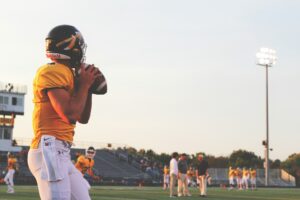
American football positions on offense form the strategic engine that pushes the ball downfield and creates scoring opportunities. Every role works together to execute plays, maintain possession, and outsmart the opposing defense. The most visible member of the offensive unit is the quarterback, who commands the play, reads defensive formations, and decides whether to pass, hand off, or run with the ball. This position demands accuracy, timing, leadership, and strong decision-making under pressure.
Behind the quarterback stands the running back, who specializes in carrying the ball and navigating gaps created by blockers. Running backs must blend speed, balance, agility, and awareness to gain consistent yardage. Some backs are built for power and short-yardage situations, while others excel in open space and catching passes out of the backfield. Alongside them is the fullback, a more physical player who acts as both a blocker and a ball carrier when needed.
Wide receivers use precise route running and speed to gain separation from defenders and provide passing targets for the quarterback. They are crucial for stretching the field and generating explosive plays that shift momentum. Another essential role on offense is the tight end, a hybrid position combining the size of a lineman with the athleticism of a receiver. Tight ends block for both the quarterback and running backs while also serving as reliable receiving threats, especially in the middle of the field.
The offensive line anchors the entire unit, and these players rarely receive the spotlight despite their importance. The center snaps the ball and immediately engages defenders to protect the quarterback. Guards and tackles form protective walls that prevent defensive pressure and open lanes for running backs. Without a strong offensive line, even the most talented skill players struggle to succeed. Every member of the offensive group embodies the core idea that American football positions rely on coordination and timing to function effectively.
Understanding American Football Positions on Defense
The defensive side of American football positions focuses on preventing the offense from gaining yards and scoring. Defensive linemen fight directly against offensive blockers and aim to disrupt running plays and pressure the quarterback. Tackles operate in the center of the line, using strength to clog running lanes and collapse the pocket. Defensive ends work along the edges and specialize in containing outside runs and rushing the quarterback from the perimeter.
Behind the line are linebackers, often considered the most versatile defenders. These players diagnose plays quickly and react with speed and physicality. Linebackers defend against the run, drop into coverage against passes, and attack the quarterback on blitzes. Their responsibilities change depending on offensive formations, making instincts and adaptability essential traits.
The secondary includes cornerbacks and safeties, who focus on defending the pass and preventing big plays. Cornerbacks line up across from receivers and attempt to disrupt routes, block throwing lanes, and force incompletions. Their success requires quick reactions, agility, and a deep understanding of receiver tendencies. Safeties act as the final line of defense. Free safeties usually patrol deep areas of the field, while strong safeties support both run defense and coverage responsibilities. The harmony between these roles reveals how interconnected every defensive assignment is within the broader system of American football positions.
Understanding American Football Positions on Special Teams
Special teams represent a unique collection of American football positions that often change the momentum of a game. The kicker handles field goals, extra points, and kickoffs. Their role demands precision and consistency, especially in high-pressure moments when a single kick can determine the outcome of a contest. Punters control field position by sending the ball deep into the opponent’s territory, aiming for distance, hang time, and placement that limits returns.
Return specialists, including kick returners and punt returners, must read the field quickly after catching the ball and use agility and speed to create long gains or even score. Their contributions often shift field position dramatically, setting up scoring opportunities or rescuing the team from deep defensive territory. The long snapper ensures that punts and field goal attempts are executed smoothly by delivering accurate snaps. The holder positions the ball precisely for the kicker, creating a synchronized operation that requires practice and timing.
Although these roles may seem limited in the number of plays they participate in, special teams often decide close matchups. A single blocked kick, long return, or perfectly placed punt can influence strategy and momentum. This is why special teams remain an essential component when studying American football positions and understanding how every player contributes to the overall game strategy.
How American Football Positions Work Together
The success of any team depends on how well all American football positions complement one another. Offense, defense, and special teams share equal responsibility for controlling the pace and direction of the game. Offensive players must synchronize their movements and timing to execute plays cleanly. A quarterback depends on receivers to run crisp routes, on linemen to provide protection, and on running backs to exploit openings decisively.
Defensive players require communication and discipline to maintain their assignments. A breakdown in coverage or a missed tackle can create opportunities for the opponent to score. Linebackers and defensive backs must trust the defensive line to generate pressure, while the line depends on coverage to force quarterbacks to hold the ball long enough for sacks and disruptions.
Special teams also rely on teamwork and practiced rhythm. Successful field goals require perfect coordination between the snapper, holder, and kicker. Effective returns require blockers to clear lanes at the right moment. Each role has a defined purpose, and the cohesion of these parts transforms a team into a competitive unit.
When viewed together, all American football positions illustrate how strategic, physical, and collaborative the sport truly is. Understanding these roles enhances appreciation for the game and deepens the experience of watching or playing football. The complexity behind each position reveals why football is often described as a blend of athleticism, coordination, and tactical thinking.